I was wrong about Captain Hastings (or was I?)

cw: mild spoilers from Poirot novels- The Mysterious Affair at Styles, The Murder on the Links and Curtain: Poirot’s last case.
This is strictly not a hate post. I am not a man hater. And certainly not a fictional character hater. And certainly not an Agatha Christie character hater. I am no hater.
Ever since I started reading (and eventually got obsessed with) Poirot novels, this certain trait of Captain Hastings has been sort of getting under my skin, I suppose?
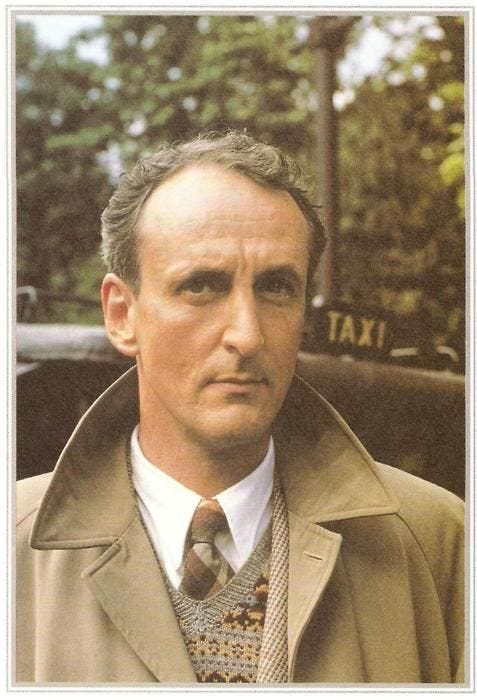
Captain Hastings is a very important character, no doubt. He has been the reliable and honest narrator throughout the majority of the Poirot novels. He is probably what an average narrator feels like. He is straightforward, simple-minded, somewhat easily misled, a little baby-girl coded, if you ask me. He’s not stupid, no. But his famous detective friend describes him as honest and transparent as he often misses hidden agendas or clues for he takes things at face value.
( But, I don’t understand why he questions his Belgian friend’s capabilities sometimes, being fully aware of his genius)
But as I said, there’s a trait about this narrator— which he himself can’t help but reveal throughout the course of his adventures.
His attitude about women.
Now, I have nothing against him describing women with respect to their looks. He is the narrator. It’s his job to describe the characters as they are. Beautiful, with a Madonna face, long silky hair, lustrous lips etc.
That’s him opening a door for us to see the characters for ourselves.
But what ‘nags’ me (if you can call it that) is what follows after. His own ideologies of these characters—especially women—that solely revolve around their beauty. Their physical appearances.
But first, to clear one subject. Why do I feel like I was wrong about him?
Well, it was just a brief moment of mischaracterization. Something inside me declared him a ‘womanizer’ before my frontal lobes had the time to think straight.
So Captain Hastings is definitely not a womanizer. That is a strong accusation.
The reason this specific term came to my mind was because of his chivalrous nature. How he gets naively bowled over by any woman who is particularly beautiful. And trust me, being physically attractive is enough.
But obviously, he isn’t a womanizer.
Although his ideologies of women still reeks.
What better way to explain this than actual instances from the books. (this is my favorite part)
The first example that comes to mind is well suited for it is from the first Poirot novel ever published: The Mysterious Affair at Styles.
The Mysterious Affair at Styles was the first Poirot novel.
It introduced to us the ‘extraordinary looking little man’ as well as his faithful friend Captain Arthur Hastings.
When Hastings visits his friend, John Cavendish in the first book, he immediately gets enchanted by his wife–Mary Cavendish.
As soon as he sees her, and this, is in my opinion, he drops the role of a narrator and makes a slip:
I shall never forget my first sight of Mary Cavendish.
After a full paragraph of what a remarkable woman she seemed, and of a vision of a “wild untamed spirit in an exquisitely civilised body” inside her, he makes another remark:
—feeling distinctly glad that I had accepted John’s invitation.
There is no excuse. The man is infatuated.
If you’ve read the novel, you know that throughout the story, Hastings acts all chivalrous, shy, sometimes awkward around Mary Cavendish.
Also, as the story continues, he becomes visibly irritated (although I see no reason for him to be) with the relationship between Mrs. Cavendish and a Dr. Bauerstein, which almost everyone mistook for an intrigue.
Whenever the Doctor visited them, or took Mary for a stroll or something, Hastings displayed much annoyance from his side.
Eventually he took a dislike to the man.
But Mary Cavendish was not the only beauty to bowl over our naive chivalrous Englishman.
She was a married woman, after all.
The good Captain also set his eyes on the young Cynthia Murdoch, who lived as a dependent of Mrs. Emily Inglethorp.
The girl was young, pretty and smart.
It was evident that he fell in love with both the women. Although he made his advancements solely towards Cynthia (her being unmarried and hence available) he also couldn’t keep his heart away from Mary Cavendish.
Here’s what I read online in his defence.
That his crushes were harmless enough. That it was not a matter of ‘head over heels’ and he gave them up in the end.
“They are two delightful women!”
“And neither of them is for you?”
Sure, his crushes were harmless. Even though he seriously asked Cynthia to marry him. (and Cynthia remarked ironically that he wasn’t being serious)
The thing about his crushes—his bias towards them is what makes my face scrunch in an Okay What?
Every time Mary or Cynthia were even hinted at being suspected by Poirot, he rose to their defence. Sure, he was being chivalrous, the man of Justice. But his reasoning?
It’s because they’re beautiful.
And a beautiful woman cannot be a murderess. It’s unheard of!
A beautiful woman should be covered up in silks, not in the blood of their victims.
(ignore the fact that there is no blood in this case of poisoning, but I wanted to use this sentence)
His defence for Mary Cavendish was quite adamant in this matter. His words were:
Surely no woman as beautiful as Mary Cavendish could be a murderess.
Quickly followed by:
Yet beautiful women have been known to poison.
Quite revealing, isn’t it?
Either he thinks that beautiful women are incapable of killing or a murderer can never be beautiful. (the latter is a bit enigmatic, we’ll leave it at that)
Quite frankly, I am not impressed.
According to him, a woman’s worth lies only in her beauty. (come on man). For, a similar defence was also put forward with respect to Cynthia Murdoch.
Not only that, he, obviously out of pity, asked Cynthia to be his wife when Mrs. Inglethorp died and left her in the most awkward of positions in the house. Was he trying to take her advantage? Knowing only too well that her condition is most pitiful and that only marriage with another man could save her, that she just couldn’t refuse?
I honestly can’t say.
But all I know is that he would’ve asked anyone, even Mrs. Cavendish, had she been available, in Cynthia’s place. (he even had the audacity to get mad when got rejected, good for the girl to reject him)
At the end of the story, none of the women could be his, and Poirot placidly assures him that maybe in their next hunt.
Then their next hunt arrives.
In only the first chapter of The Murder on the Links, Hastings displays again an absurd opinion towards women.
And in his defence, he just calls himself old-fashioned.
Now, I am old-fashioned. A woman, I consider, should be womanly. I have no patience with the modern neurotic girl who jazzes from morning to night, smokes like a chimney, and uses a language which would make a Billingsgate fish-woman blush.
This was used to describe his fellow traveller in a train-boat. A girl.
Reading this paragraph, as a ‘modern neurotic girl’ myself, makes me a bit uncomfortable. The retired Captain disapproves of women jazzing to music, smoking and using language. Note that he disapproves only of women.
They, instead, should be womanly.
Reading his face, even his companion remarked:
He disapproves!
(quite unabashedly, good for her)
Later when he meets Cinderella (as she gave her name) again, he is strongly disgusted by her morbid nature. Her excitement over the murder of Mr. Renauld and her adamantness over seeing his dead body and the murder weapon apparently ‘nauseated’ him.
She obviously had ulterior motives, but he didn’t know that.
His exact words were:
I turned away, sickened. What were women coming to nowadays? The girl’s ghoulish excitement nauseated me.
You may argue that maybe he’s sensitive to such things. But notice how he specifically says women instead of using people to express his concern in general. This indicates a personal bias, surely.
Well, naturally he disapproves. That is not at all womanly!
(captain hastings disapproves, guys)
(do not get excited over murder again)
In chapter 22, I find love, when he recognizes his feelings for Cinderella (Dulcie Duveen), while also misunderstanding that she’s the real culprit, he displays yet another astonishing statement.
He actually felt glad she was the murderer but because of her jealousy for Jack Renauld, not because of her ‘sickening’ morbid obsession for blood and mayhem.
You heard it girls. He approves of being jealous and killing people because of it but not being unwomanly.
So the next time, do it while portraying the perfect woman. Beautiful and submissive.
Despite all this, he gets a cute little ending with Cinderella (well deserved, I suppose)
And I honestly think it was cute, okay?
Lines like,
I took her hand in both of mine. My eyes said the rest.
And,
‘ “Hell!” said the Prince—and kissed her!’
And I suited the action to the word.
Made me collectively do a big awwwww…
Their marriage was a faithful one and they were together till death did them part.
My concluding thoughts are such.
I don’t think Captain Hastings was a misogynist. Maybe just an average man. Who thinks of women as first women before a human and judges them based on their beauty. He’s judgmental without actually bringing any harm. That’s how he manages to be on the safe side, I suppose.
I’ve been thinking about writing my opinion on this for a few days now. It feels good to get it out of my mind. I don’t know if I make sense or not, what matters is that what I think of the Captain is finally out there for others to read.
So with this last line etched on my notebook (later in my laptop) and with a few Agatha Christie books by my side, at precisely 10:34 pm, I bid my adieu.
That’s it for today.
Have a good day, mon ami!


Comments
Post a Comment